AI that makes people better, not replaceable. I'm building it in four parts of life, and every skill I have goes into one of them. Where it all goes
Work
Find the work that gives back.
Your twin knows what you've built and how you think. It sits the first interviews, finds the roles worth your time, and shows you the gap between you and the job you want, so you can learn your way there.
AI-native recruitment
Personal
Be the one who remembers.
The hard week, the promise, their kid's name. It holds the small things, shows you your patterns and your weak spots, and never lectures.
Tacit Mind
Health, through sport
Get better every time you play.
A coach's judgement on every shot, not twice a month. Coaches reach more people without losing what makes them good. Golf first.
Physical
Put AI where the world is.
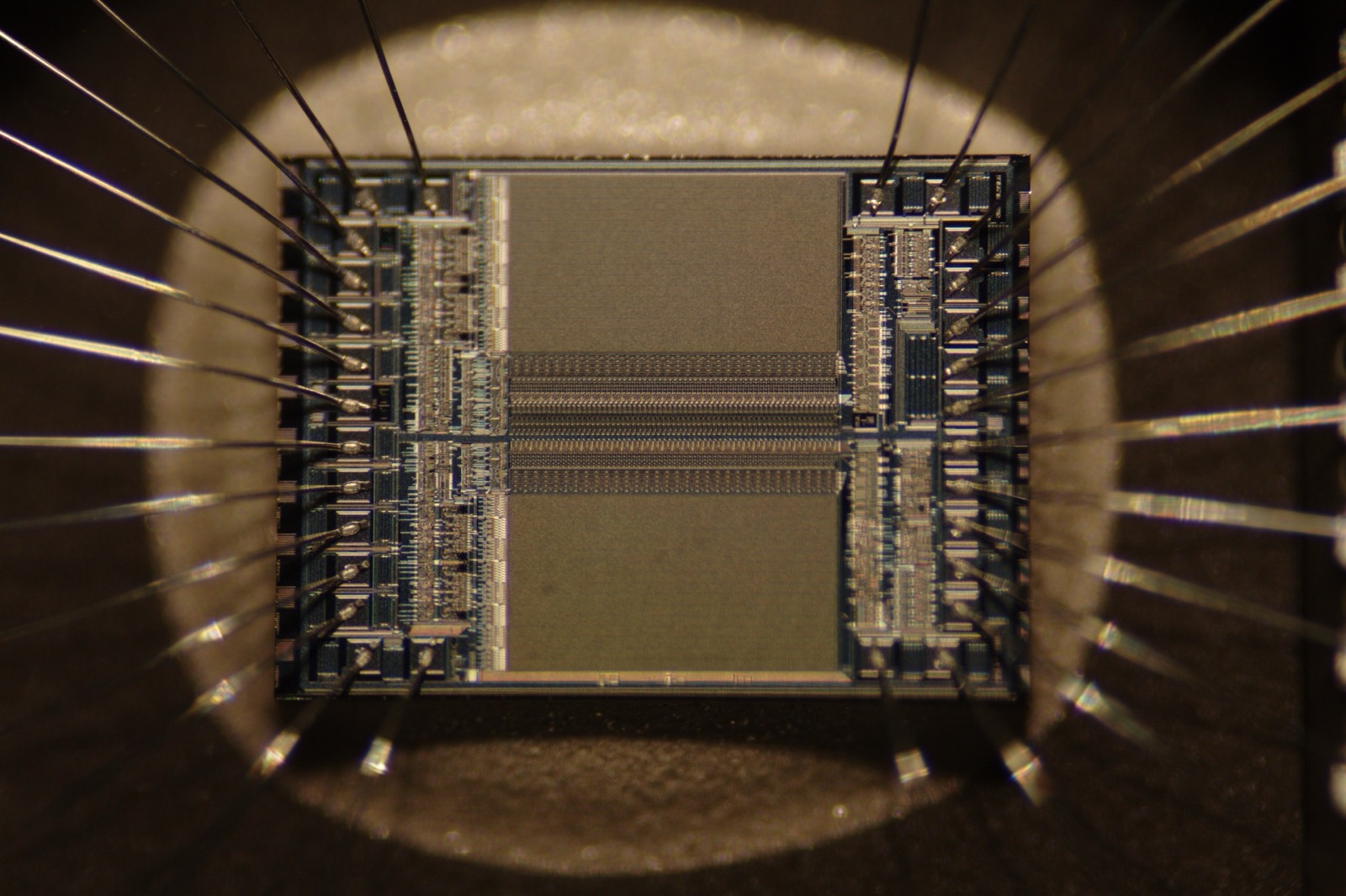
On the phone, on the wrist, on the chip. Engines that give the same answer everywhere, and vision that reads the ground.
Embedded
The job, rewritten
My twin goes job hunting for me: it reads every role, applies with proof, sits the first round, and meets company twins in sealed rooms. On 30 January it sits a real interview against me. Scroll, and watch where work goes next.
96days to the interview
A caddie that does the maths
A model can say anything. A golf ball can't. So in Drop The Hands the engine works out every number, and the model only gets to explain it. Scroll, and watch it think on a real hole.
Every AI you use starts from zero. Tacit Mind is one memory behind all of them, so they start from you: what you know, what you decided, and why. Scroll, and watch one conversation become a mind.
Now try it: pick a moment, and watch what your twin keeps.
The article is a real save. The round is an example.
ClaudeYour twin is on
Listening
1 of 8
How it came togetherTime runs left to right. Each line is an idea: where it started, where it moved, what Claude took. It all comes to one new why.
Starts from what it knows
Hears you
Re-draws the map
Reads what fits
Goes deeper
Finds your why
Checks what may leave
Answers from what it pulled
Same article, two answers
Any AI on its own
Great essay. Hallucination is a well-known problem. You could add retrieval, ask the model to cite its sources, and lower the temperature.
Correct, and no use to you.
The same AI, with your twin
It matters most for your twin. A twin that makes up your reasons fails on 30 January. Keep logging your reasons word for word, and give it a guard like the caddie's. I've added "never invent a why" to the interview set.
Your ruleThe risk, spottedThe caddie guard
Rebuilt every turnContext is chosen fresh from what was just said, never a fixed prompt.
Sealed by who's askingA golfer, a recruiter and a client each see only their layer. Client rooms are islands.
Memory with reasonsEvery memory keeps its why and its history, so the twin can say when it changed its mind.
One door, every AIThe same memory in Claude, ChatGPT, Grok and this site, through one MCP connector.
What I'm deep in right now. Each of these is running in my own stack, or marked if it's still being built.
Security
Agents never hold a key
One Rust executor holds every credential. Agents propose typed effects, policy checks them, and anything irreversible is signed with a passkey on my phone. The box re-checks the exact proposal hash before it acts.
RustPasskeysTyped effects
A sandbox per job
Every agent job gets a throwaway VM: a fresh clone in, a branch out through an egress proxy, then it's destroyed. The reader that touches untrusted text has no network and no shell.
Apple containergVisorEgress proxy
Five adversaries
Threat-modelled against the AI being tricked, other tenants, outside attackers, the operator and the cloud provider. Every answer passes a no-leak gate per audience, and holds when unsure.
Keys per person, logs that can't lie
Per-user encryption keys, an append-only audit trail of every record an answer read, and access that fails closed. Built toward an operator who can't read your vault. Building
XChaCha20-Poly1305HKDFHash chain
Context
Re-decided every turn
On each turn, lenses run over a knowledge graph and build a fresh map of what matters. The model reads that map, never a fixed prompt.
Small models judge, big models think
Fast System One judgment models do recall, routing and classification. Frontier models are spent only on meaning.
TypeSafe JevMCP
Recall under a second
A warm in-memory runtime, precomputed neighbourhoods and local int8 embeddings. Text lives in git, links live in Postgres. Building
ONNXPostgrespgvector
It sleeps
A nightly pass relinks everything, refreshes the cards and precomputes what you're likely to ask next. Building
Reliability
Fails closed, heals forward
When unsure, refuse. A failed rebuild keeps the last good image and finishes the rest. Next, an alert turns into a draft fix from the always-on box. Building
Replay everything
Every fact keeps its history, and links know when they were true. Each new lens re-runs over the whole past, so improvements reach old data too.
Measured, not vibes
Card IQ scores whether a model can use a memory. Tool IQ scores whether it picks the right tool. Golden corpora gate every release.
Attack it yourself
Every change gets a reviewer whose only job is to break it. That's how a policy bug got caught that every test had passed.
A sales guy who ships real software.
How I got here. Looking back, it was the same problem every time, seen from a different side.
ArizonaWhere it started
I'm American. It started in Arizona, and it's still one of the two clocks at the top of this page.
Europe, twenty yearsTelecoms, then recruitment
I moved to Europe and stayed for twenty years, across several countries. Telecoms first, then recruitment: putting the right people in front of the right work. I'm still building that, with twins doing the first round.
SwingDev, seven yearsFour people to about 200 engineers
We started SwingDev as four people. We partnered with a Silicon Valley recruiting firm and built software for VCs and the companies they backed. Seven years later we were about 200 engineers, and one of our biggest clients bought the company.
What I took from itSoftware is never the point. It's a tool someone uses to reach a business goal.
Running teams for clientsThe same problem, four times
Delivery was never an issue. It was more the misunderstanding.
Over more than a decade of building for clients, the code was rarely what went wrong. I kept going after the misunderstanding, one layer closer each time.
Match better. We screened more than 200 engineering teams on seven dimensions. Delivery stopped failing. Projects still went wrong.
Put someone in the middle. A project ambassador between US clients and European teams. Everyone felt aligned, and two weeks later it turned out they weren't.
Workshop it, then prototype it. That fixed the development problem. The client problem survived, because the real gaps only show once the thing actually runs.
Build the real thing. Only a working product in real hands proves you understood.
Along the way I won a Europe-wide engineering supplier contract and built the app.
What I took from itAgreement is not alignment. A signed spec proves nothing.
33primeIdea to shipped, in about a quarter
33prime is my studio. We stopped prototyping understanding and started building the product, in real hands within about three months. Weekly ships on real data, and the client owns the cloud, the accounts and the code.
Real-time computer vision for city transit. I led discovery, supplier choice and delivery, on budget at half the competing bid.
An HVAC operations platform, back office to technician app, that started with a two-day workshop with every department.
A patient-owned health-data platform, a music-royalties platform, build-materials software for contractors, and PR automation.
Six years alongside an embedded team in Poland, from firmware to FPGA.
Now, from PolandBuilding the twin in public
Poland is home. I'm CTO of Tacit Mind, Drop The Hands and Golf Course Atlas. In April my twin started listening. Now it writes like me. On 30 January it sits a real interview against me, judged blind.
Where it all pointsEvery fix I tried was reaching for the same thing: what someone actually means, and why. That's what Tacit Mind keeps. Where it all goes
Let's see if it fits
Get to know what I'm working on. Soon my twin will tell you straight whether it's a match. Until then, email me and I will.
Build an AI product with meArchitecture, security and a working first version, then production.
Bring AI into your companyContext, agents you can trust, and a team that actually uses them.
Talk golfCoaches, courses and clubs who want to try coach twins early.
Matt's twinAnswers in my words. Asks me when it doesn't know.
It writes now. Voice in November.
Coming soon
My twin is in training.
It already writes in my words. It opens here once it's dialled in: fast, grounded in what I actually know, and honest when it doesn't. Until then, watch the mind it will think with.